A joint statement released on Thursday said both sides exchanged views in an 'open and constructive' manner to resolve the 'relevant issues' and that it was agreed to maintain 'security and stability' on the ground in the region.
With the Indian Army having blocked the PLA several kilometres inside India, hundreds of soldiers from both sides remain in a tense face-off.

Senior officers recounted extreme Chinese brutality to the Indian prisoners, with some of them being pushed over cliffs and soldiers' bodies being recovered from the Galwan River.

The Border Defence Cooperation Agreement inked between India and China on Wednesday facilitates establishment of a hotline between the military headquarters of the two countries, besides border personnel meeting sites in all sectors receiving broad directive not to tail each others' patrols along the disputed borders.
Virtually defending the latest incursion by the People's Liberation Army in the Chumar sector in Ladakh, China on Thursday said its troops were patrolling on its side of the Line of Actual Control and asserted that "status quo" should not be changed pending a final settlement.
Gen Wang is the fourth commander to head the Western Theatre Command after the eastern Ladakh standoff began in May last year.
The meeting primarily focused on implementation of certain decisions taken at the fifth round of talks between Corps Commanders of the two armies last week on the disengagement process as well as to bring down prevailing tension in the region, sources said.
In a fresh incident in eastern Ladakh, the Chinese PLA carried out "provocative military movements" to "unilaterally" change the status quo on the southern bank of Pangong Tso lake but the attempt was thwarted by the Indian troops, the Army said here.
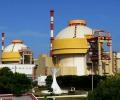
India and Russia are involved in talks to sort out the nuclear liability issues before they sign an agreement for setting up Units III and IV of the Kudankulam power plant in Tamil Nadu during Prime Minister Manmohan Singh's annual summit with President Putin in Moscow next week.
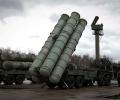
RInstead of disengagement, the Indian and Chinese armies have deployed an estimated 35,000 to 40,000 soldiers each along the LAC. The PLA has deployed S-400 air defence missiles to neutralise the IAF's advantage in air power

Special Representatives of India and China will hold the 16th round of boundary talks in Beijing on Friday, the first such meeting under the new Chinese leadership, to make another bid to move forward on the resolution of the vexed dispute.
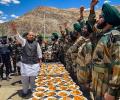
Defence Minister Rajnath Singh on Monday said India is a peace-loving nation that never resorts to any kind of aggression but is always prepared to give a befitting reply if provoked or threatened.

Sources indicated that during Saturday's talks, India will insist on a faster disengagement process in remaining areas to bring down tension in the region, which has witnessed a tense standoff between the two militaries for over nine months.

'It is because of the bravery of Colonel Santosh Babu and his men that we have not seen a violent escalation anywhere else along the LAC.'
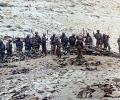
In the 15-year dataset, the researchers noted an average of 7.8 incursions per year even though the Indian government's estimates are much higher.

The marathon fourth round of Lt Gen-level talks also focussed on steps for pulling back large number of troops and weapons from rear bases along the Line of Actual Control in eastern Ladakh.
The Indian delegation at Thursday's talks is likely to be led by Naveen Srivastava, Joint Secretary (East Asia) in the external affairs ministry, they said.

Sibal asked Modi to stop doing the politics of "illusion and delusion" and showing "red eyes" to China, and protect Indian territory.

The Central Military Commission, which is the overall high command of the Chinese military, is headed by Chinese President Xi Jinping.
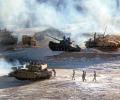
'India cannot allow Beijing's policy of stabilising and destabilising the border at will to perpetuate its own ends.' A riveting excerpt from Manish Tiwari's 10 Flashpoints; 20 Years National Security Situations That Impacted India.
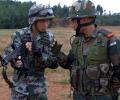
The statement of Commander of US Indo-Pacific Command Admiral John Aquilino on Wednesday came ahead of the 15th round of high-level military talks between India and China on March 11.

The Chinese military has already completed moving back its troops from the face-off sites in Galwan Valley, Gogra and Hot Springs in line with the first phase of the disengagement process from the friction points on the LAC in eastern Ladakh, sources said. The main focus now shifts to Pangong Tso. India has been insisting that China must withdraw its forces from areas between Finger Four and Eight.
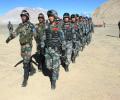
During the course of the intense and complex negotiations between senior commanders of the two armies that ended at 2 am on Wednesday, the Indian delegation also apprised the Chinese PLA about the "red lines" and conveyed that the onus was largely on China to improve the overall situation in the region, the sources said.
During their hour-long in-person meeting on the sidelines of a Shanghai Cooperation Organisation (SCO) conclave in Dushanbe on Wednesday, External Affairs Minister S Jaishankar also told his Chinese counterpart and State Councilor Wang Yi that any unilateral change in the status quo along the Line of Actual Control (LAC) was 'not acceptable' to India and that the overall ties can only develop after full restoration of peace and tranquillity in eastern Ladakh.
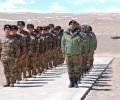
Chinese Foreign Ministry spokesman Wang Wenbin said this at his media briefing as he parried questions on India's assertion that consensus reached by the leaders on maintaining peace along the border cannot be swept under the carpet.
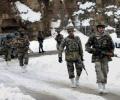
Within the army, there is growing concern that New Delhi will allow the Chinese to retain the territory they have occupied in the last month.
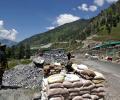
The meeting was attended by National Security Advisor Ajit Doval, Chief of Defence Staff General Bipin Rawat, Army Chief General M M Naravane, Navy Chief Admiral Karambir Singh and Indian Air Force Chief Air Chief Marshal R K S Bhadauria.

The Chinese military is now desperately attempting to give "ex post facto strategic meaning" to its actions in eastern Ladakh.
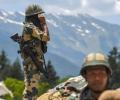
Gen Naravane said India is dealing with China in a "firm" and "non-escalatory" manner to ensure the sanctity of its claims in eastern Ladakh, and that it was even open to initiating confidence-building measures.

These missiles have a range of two to five km and they are capable of bringing down low flying helicopters and aircraft, they added.

India and China decided to seek a fair and rational solution to their border dispute on Saturday as they focused on the proposed border defence cooperation agreement to avert incursions like the one witnessed in Leh region last month.

'Problems will keep recurring unless China vows to resolve all outstanding issues between the two sides,' says Sana Hashmi.
India's top military and strategic brass on Tuesday reviewed the overall situation in eastern Ladakh amid indications that the latest round of talks between senior military commanders of Indian and Chinese armies on the next phase of disengagement of troops may not have produced encouraging results, people familiar with the developments said.

'China knows the best way of twisting the knife in its dealings with India: By launching a major incursion into Indian territory,' says Rajeev Sharma.

Until last month more than two-thirds of the Indian Army was deployed against Pakistan. Of 14 army corps, just four-and-a-half faced China, while more than twice that number was ranged against Pakistan.

The Army has also further bolstered overall surveillance mechanisms in all areas along the Line of Actual Control (LAC) in eastern Ladakh after foiling China's fresh attempt to occupy an area on the southern bank of Pangong lake, they said.

Prime Minister Manmohan Singh on Sunday left for a five-day visit to Russia and China.

The Chinese have only created limited defences for protection of their posts which are located well in depth and much away from the Line of Actual Control, notes Colonel S Dinny (retd).
The Indian side also told the Chinese delegation that the talks on disengagement should include Depsang as well as all face-off sites, insisting that it should be a simultaneous process and not a selective one.

The Ministry of External Affairs (MEA) spokesperson Anurag Srivastava said complete disengagement requires re-deployment of troops by each side towards their regular posts on their respective sides of the Line of Actual Control(LAC) and this can be done only through mutually agreed actions.
 © 2026 Rediff.com - Advertise with us - Disclaimer - Privacy Policy - Sitemap - Feedback - About us - Terms of use - Grievances